




DBCLM (Don Bosco Child Labour Mission) got a unique and rare opportunity to get the support and collaboration of the city administrative body in the Project of CFCI. As Davangere is chosen for the smart city programme the corporation invited suggestions from the civil society for the preparation of Budget for the coming financial year. DBCLM made use of this opportunity and submitted a memorandum to the Mayor and the City Commissioner to include the concept of Child Friendly City in the budget and in the building of a Smart City.
Submission of Memorandum to the City Corporation’s Administrative Body
On 24th Feb 2016 DBCLM submitted a memorandum to the Mayor and the City Commissioner to include the concept of Child Friendly City in the budget and in the building of a Smart City.
Through the memorandum DBCLM highlighted the fact that every year the corporation spends crores of rupees for the construction of roads, drainage, street lights, parks, garbage disposal etc. no budget is allotted for children’s welfare. We also pointed out that even now many children are exploited and there are many children who are forced to do begging, rag-picking, and work in other sectors. We also find many children who live on the street of the city.
There are many children who are affected and infected by HIV. Davangere District has 25,000 children with special needs. And no budgetary allocation is made for the welfare of these children. In this context DBCLM placed the following demands in the memorandum submitted to the City Corporation:
- Ensure children’s participations before preparing the Budget of the City Corporation. We suggested to include, Representatives from Child Rights clubs, Meena Thanda (Children’s clubs formed by the Educational Department) and members of District Child Rights Forum formed by DBCLM, to seek children’s opinion.
- Construct good roads so that all children can go to school.
- Ensure safety of children especially by parents who hire Auto-rickshaw and other public vehicles for sending children to schools.
- Creation of clean city with proper garbage disposal is done.
- Make good, attractive and child friendly parks in the city.
- Complete Prohibition of begging by children and provision of Open Shelter for the Care and Protection of these children.
- Organize children’s meeting once in 3 months to discuss their problems and concerns.
- Allot budget for creating awareness on child labours, child marriage and on child rights.
- Ensure potable water in every school of the City Corporation limits and sufficient toilets in the Schools.
The Mayor and the Commissioner of City Corporation assured that they would discuss with city Corporation members when the budgets is presented and would include the concept of Child Friendly City in the budget.
Consultation meeting with Davangere City Corporation Commissioner, Mayor, Deputy Mayor and Corporators
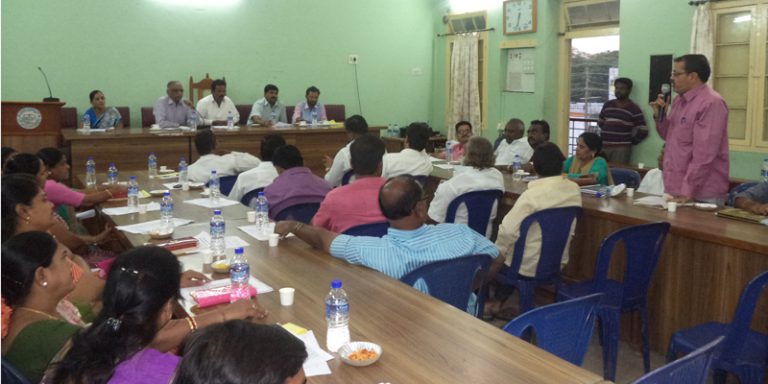
After many meetings with the Mayor and the Commissioner of Corporation we got an opportunity to conduct a consultation meeting on CFCI with the City Corporation- Commissioner, Mayor, Deputy Mayor and 41 Corporators of the City.
On 24-02-2016 before the budget session of the corporation. DBCLM was given a chance to present the concept of Child Friendly City Initiative of the DB Forum for the Young at Risk. DBCLM gave a presentation on the following points:
- The situation of children especially those at Risk in Davangere,
- The concept of CFCI
- The need to involve children in preparing the Annual Action plan of the City
- Need for children’s participation in formulating Action Plan and Budget for the city a
- The need to include Child Friendly City concept and providing budgetary allocation for the Programme in Davangere city.
After the presentation the Commissioner asked the Corporator’s suggestions. Most of the Corporators agreed to support the CFCI Project. We are happy to state that many media people were also present during the presentation.
Thus DBCLM was able to involve, consult and train one of the most key and strategic stakeholders namely the city administration on the CFCI Project. The promise of support and collaboration given by the various stakeholders has increased our confidence to launch this programme successfully.